
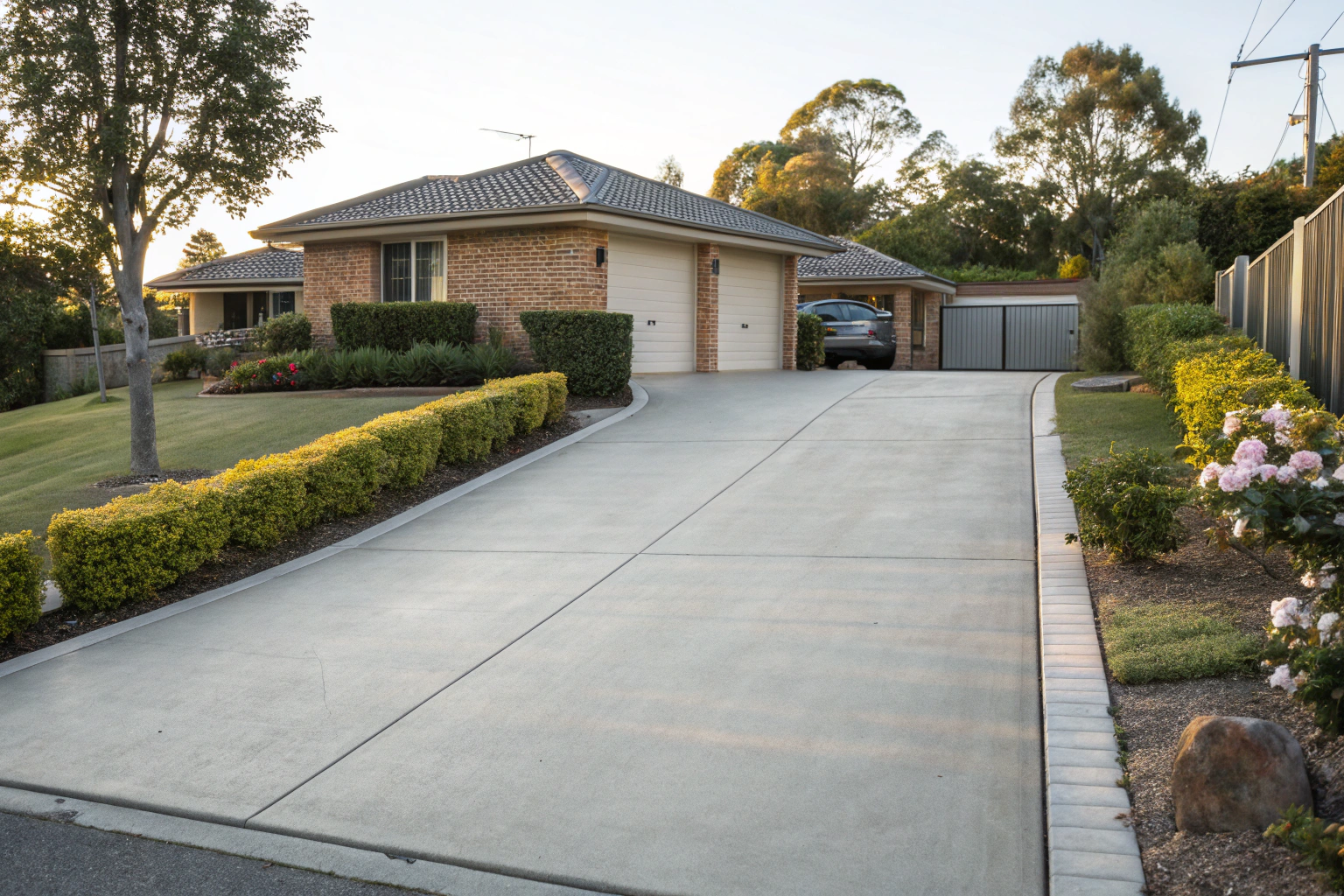
Driveway Crossover Hervey Bay: A Guide to Council Rules and Permits
Here’s something a lot of people around the Bay don’t know. The bit of driveway between the kerb and your front fence line isn’t on your land. It’s on Council land. But you’re the one who has to look after it.
That bit is called a driveway crossover. If you’re planning a driveway crossover in Hervey Bay, it pays to learn the rules first.
Fraser Coast Regional Council calls it a vehicle crossover. Its rules are in a policy called CP074. Council last approved it on 30 June 2025. It covers crossovers on Council roads across the Hervey Bay urban area.
Some main roads are different. They belong to the state. On those roads, Main Roads (the Department of Transport and Main Roads, or TMR) is in charge instead.
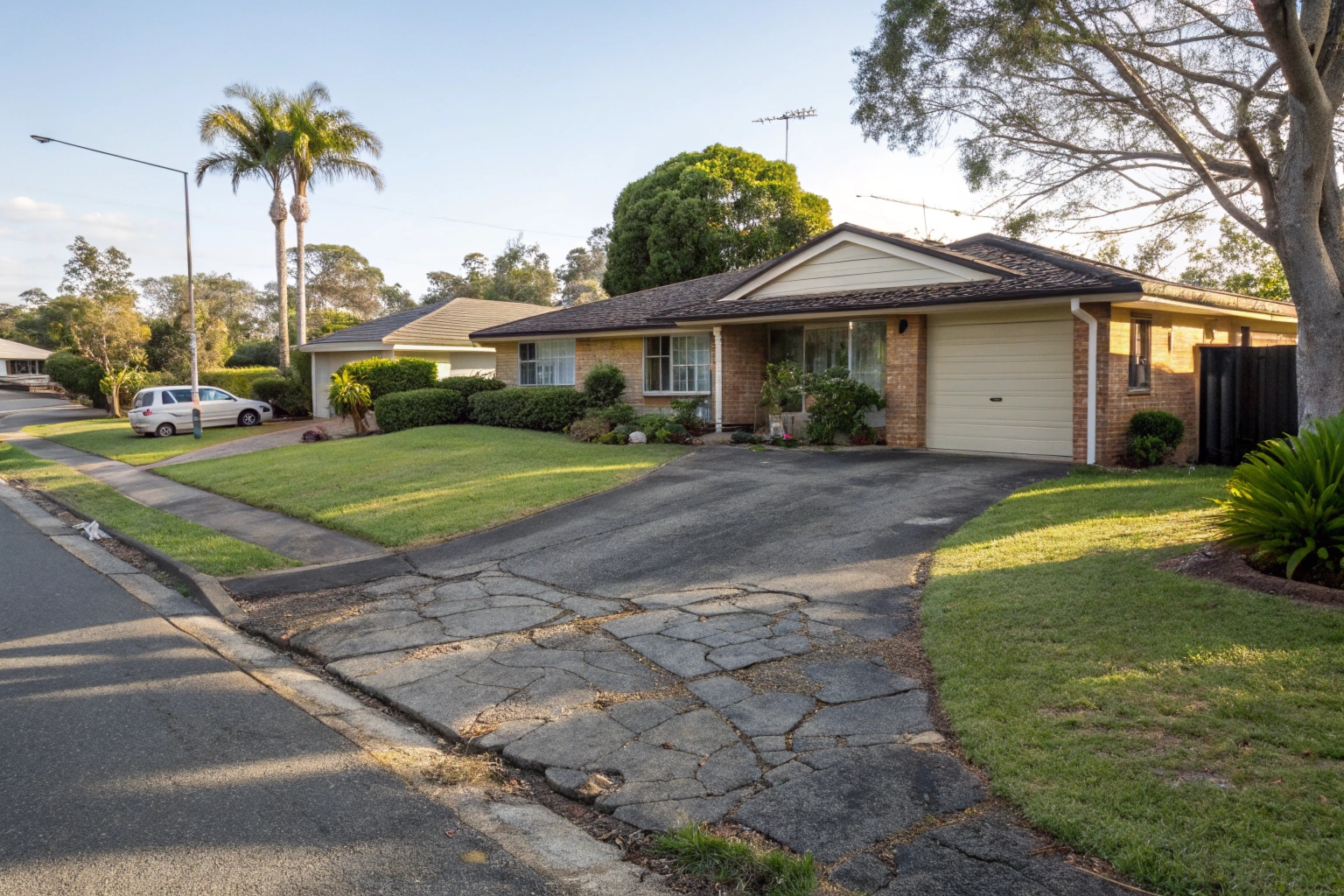
Maybe you’re putting in a new driveway. Maybe the old one has had its day. Maybe you want a second driveway for the boat or the caravan, or a new finish. Whatever the job, our advice is simple: sort out the crossover first. It’s the part with the most rules.
This guide shows you who to ask, when you need a permit, where your crossover can go, how it has to be built, and what’s on you once it’s done.
In this guide:
- What Is a Driveway Crossover (and Why It Has Its Own Rules)?
- Council Road or State-Controlled Road? Check Who Approves First
- When You Need a Council Permit (and When You Don’t)
- Where a Crossover Can Go: Location, Number and Width Limits
- Required Clearances Around Verge Infrastructure
- Design Standards: Standard Drawings, Surfaces and Low-Lying Blocks
- Decorative Finishes, Damage by Others and Council Compliance
- Before You Start: A Crossover Planning Checklist
What Is a Driveway Crossover (and Why It Has Its Own Rules)?
The crossover is the part of your driveway between the road and your property line. It’s the bit you drive over to get from the street onto your block. Most people know this area as the verge, or the grass strip out the front.
Where the crossover sits:
Your property → Property boundary → Crossover (across the verge) → Kerb / road edge → Road
This strip is outside your property. It’s part of Council’s road reserve. That’s the public land that runs along the road.
So why is it your job to look after? Because the crossover is only there for you. Council’s rules say the owner builds it and the owner looks after it.
All the rules for this part come from Council’s Vehicle Crossover (Driveway) Policy. It covers every crossover on a Council road, whether it’s there for good or just for a while.
The rest of your driveway, inside your fence line, is a different story. This guide is only about the crossover.
Council Road or State-Controlled Road? Check Who Approves First
Before you plan anything else, check who looks after your road. This tells you who you need to deal with.
- Council roads: Your crossover follows Fraser Coast Regional Council’s policy, CP074.
- State roads: Your crossover is up to Main Roads (TMR), not Council. Questions go to the DTMR office in Bundaberg.
Most streets around the Bay are Council roads. But a few main roads through the Hervey Bay urban area belong to the state. These include Maryborough–Hervey Bay Road, which carries on as Boat Harbour Drive, and Pialba–Burrum Heads Road.
Quick check: Is your house on Maryborough–Hervey Bay Road (including the Boat Harbour Drive stretch) or Pialba–Burrum Heads Road? If so, call DTMR Bundaberg first. Ask them if your part of the road is a state road.
We’d do this check before anything else. It’s quick, and it tells you whose rules you’re working with.
If your house is on a Council road, keep reading. The rest of this guide is for you.
When You Need a Council Permit (and When You Don’t)
Do I need a permit for a driveway crossover in Hervey Bay?
Yes, if you’re building a new crossover or making a big change to the one you have. Small repairs are treated differently. Here’s what Council says:
- You need a Council permit to build a new crossover. You also need one to make a big change to an old one.
- Under Local Law 1, you don’t need a permit to fix or look after a crossover, as long as the work doesn’t get in the way of the road. You still need to follow work safety laws. That includes having a Traffic Management Plan.
- If your house is on a state road, Main Roads (TMR) is in charge, not Council. Questions go to DTMR Bundaberg.
- You can build your own crossover if you meet all of Council’s rules. Or you can hire a licensed contractor.
Not sure if your job counts as a “big change”? Don’t guess. Ask Council before you start. It’s much easier to ask first than to fix things later.
You can read Council’s vehicle crossover fact sheet and the current policy to make sure you have the latest rules.
Once you know where you stand, have a chat with Coastal Concreters Hervey Bay about your whole driveway, including the bit across the verge.
Where a Crossover Can Go: Location, Number and Width Limits
You can’t always put a crossover wherever you like along the front of your block. Council’s policy says crossovers generally can’t go:
- on the curved kerb at a corner, or within 6 m past the end of that curve
- across from a T-intersection
- where drivers can’t see far enough down the road
- on main roads where cars turning right into your place would hold up other traffic
How many crossovers can you have?
Council will generally approve one crossover for each property. A second one might be approved, but Council has to check it first. Both driveways added together can’t be wider than 30% of the front of your block.
Here’s how that works, using made-up numbers. Say the front of your block is 20 m wide. 30% of 20 m is 6 m. So both crossovers together would need to be 6 m wide or less.
Keep in mind that meeting the 30% rule doesn’t mean you’ll get a yes. Council still looks at every application. Our advice: don’t lock in plans for a second driveway until Council has had its say.
Once you know where the crossover can go, you can start planning the rest of your driveway inside your fence line.
Required Clearances Around Verge Infrastructure
Take a walk out to your verge and have a look. You might spot a stormwater pit, a power pole, a street tree or a hydrant. Your crossover has to keep a set distance from each of these. Council’s fact sheet lists the gaps:
| Infrastructure | Minimum clearance |
|---|---|
| Stormwater pits | 1 m |
| Electrical pillars | 600 mm |
| Hydrants or service valves | 600 mm |
| Street signs | 500 mm |
| Power or light poles | 1 m |
| Public transport infrastructure | 2.5 m |
| Street trees or their canopy | 1 m |
Some things on the verge can’t be moved to make room for you. These include big trees, traffic islands and stormwater pits. If one is sitting right where you want your driveway, the crossover will have to go somewhere else.
That’s why we think this walk-around is worth doing early, before you get too attached to one layout.
Design Standards: Standard Drawings, Surfaces and Low-Lying Blocks
Council has set plans for how crossovers must be built. These are called standard drawings. Which one you use depends on your type of property.
| Property type | Standard drawing |
|---|---|
| Urban residential streets with kerb and channel (up to 2 dwellings) | FC-230-01 |
| Multi-residential, small commercial and industrial | FC-230-02 (heavy duty) |
Sometimes a block just won’t fit the standard plan. When that happens, the crossover needs its own design. That design has to be signed off by a qualified engineer registered in Queensland, known as an RPEQ.
Surfaces
Council allows crossovers made from concrete, pavers, spray seal or gravel. Which one you can use depends on your situation. Check what applies to you before you pick a finish.
Low-lying blocks: Is your block lower than the road? Then the first 1.5 m of your driveway has to rise up to the height of the kerb. This helps stop stormwater running down into your yard.
Council’s fact sheet also says nibs are generally no longer allowed.
Decorative Finishes, Damage by Others and Council Compliance
Your job doesn’t stop once the crossover is built. Here are three things to know, especially before you choose a fancy finish.
If Council digs up your crossover for its own work
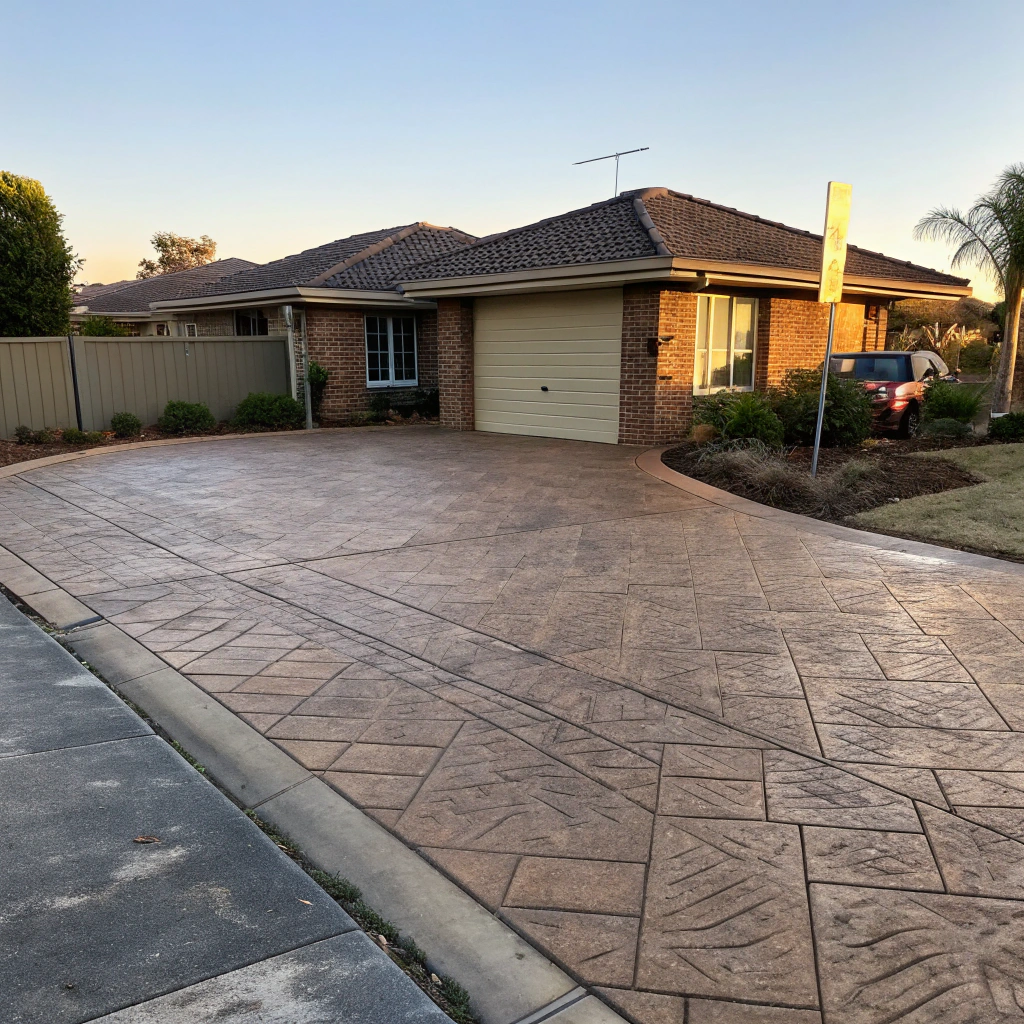
Sometimes Council needs to remove a crossover to do its own works. If yours meets the rules, Council will put it back and pay for it. But it only puts back a plain broom finish.
So if you had stencilled or coloured concrete on the verge, you pay for anything better than plain. That’s worth thinking about before you choose a finish for this strip.
If a service company damages your crossover
Companies like Telstra, NBN or Wide Bay Water sometimes damage a crossover while doing their own work. If that happens, contact that company directly.
If your crossover doesn’t meet the rules
Council can ask you to remove or change a crossover that doesn’t follow the rules. It can go like this:
- Council asks you to remove or change the crossover.
- If nothing is done within 28 days, Council can send a compliance notice.
- If it still isn’t fixed after that, you could get a fine (a penalty infringement notice).
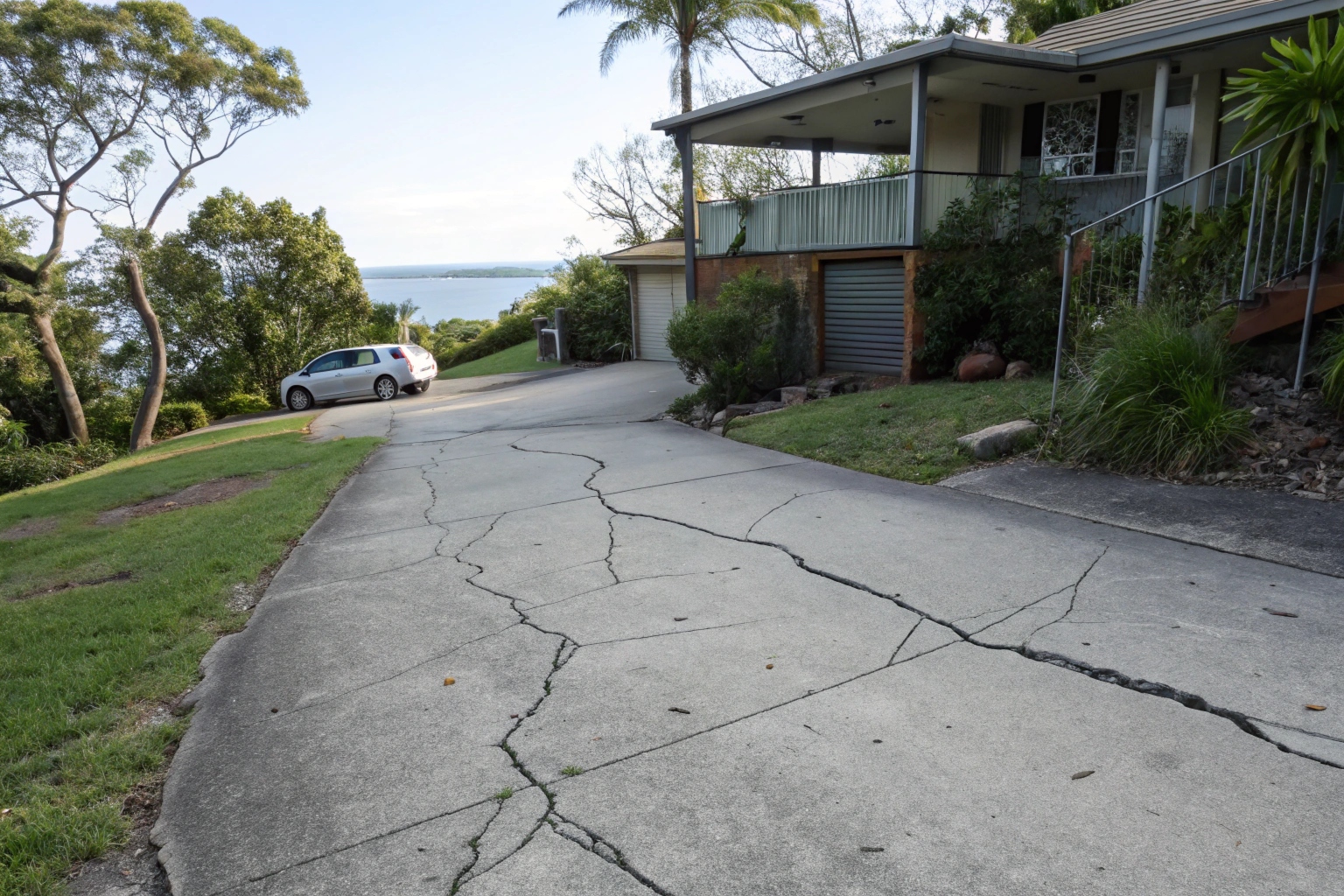
If your crossover has to come out, you might also need help removing an old driveway.
Before You Start: A Crossover Planning Checklist
Here’s a simple list to work through before anyone starts on your crossover:
- ☐ Check if your house is on a Council road or a state road.
- ☐ Check if your job needs a Council permit.
- ☐ Check where a crossover can go, including the corner rules and the one-crossover rule.
- ☐ Check the gaps you need from pits, poles, trees and other things on the verge.
- ☐ Find out which standard drawing applies, or if you need an engineer’s design.
- ☐ Check if the low-block rule applies to you.
- ☐ Pick your finish, knowing Council only puts back a plain broom finish.
- ☐ Read Council’s current Vehicle Crossover (Driveway) Policy and vehicle crossover fact sheet.
Tick these off and you’ll go into your driveway job knowing the rules. That means fewer surprises down the track.
If you’d like a quote or some advice, get in touch with a local concrete contractor in Hervey Bay at Coastal Concreters Hervey Bay.
Ready for a free on-site quote?
Coastal Concreters serves Hervey Bay and the Fraser Coast. Get an itemised quote — no vague pricing, no hidden variables.